
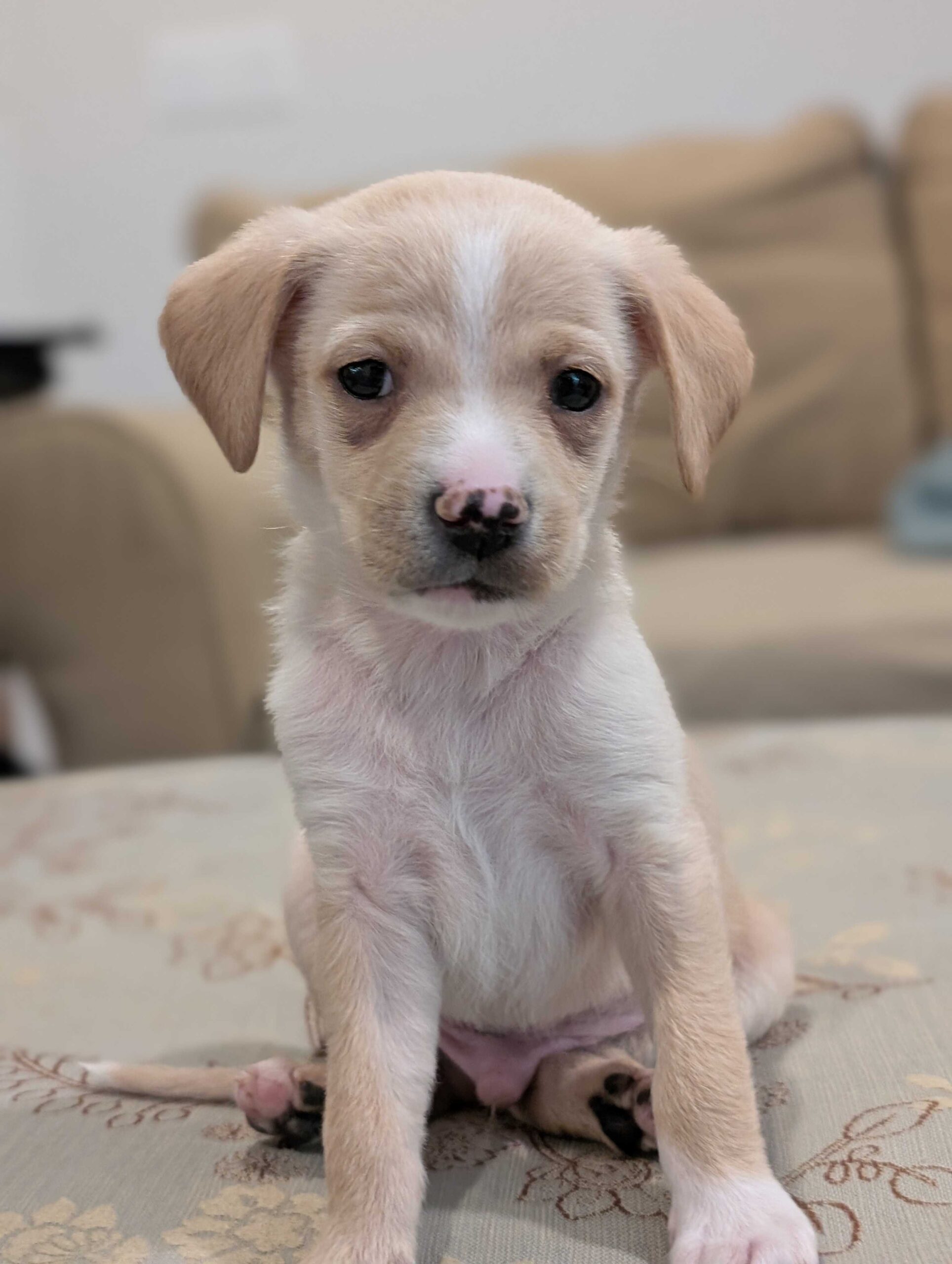
Preparing Kids for a Rescue Puppy: Our S Puppies
Three of our S puppies grew up surrounded by gentle hands and big hearts in the Kroboth home, where foster mom Kira, dad Rusty, and their three young children cared for them around the clock. These tiny neonates were getting bottle‑fed, snuggled, and soothed by a family learning the rhythms of newborn puppy care together from warming bottles to watching for sleepy squeaks. As the pups grew stronger each day, Kira’s kids discovered what it means to nurture the smallest lives, turning this foster experience into something tender, educational, and unforgettable for everyone involved.

Adopting with Kids at Home: How to Prepare Your Family for a Rescue Puppy
Kids + puppies = magic… when everyone is prepared.
That magical bond doesn’t happen by accident, it’s built through guidance, structure, and a whole lot of modeling from the grown-ups in the room.
When families take time to prepare before adoption day, we see fewer problems, fewer tears, fewer overwhelmed parents, and far safer interactions for everyone involved. This post is your roadmap to setting your kids (and your new puppy) up for success.
Age-Appropriate Expectations for preparing kids for a rescue puppy
Every child can participate in puppy care but not every child can do every task.
Toddlers (1–3 years)
- Can help toss treats on the floor
- Can “help” refill water with supervision
- Cannot be responsible for holding, carrying, or correcting a puppy
Preschoolers (4–6 years)
- Can help with simple training games
- Can practice gentle petting and calm body language
- Need constant supervision during all interactions
School-Age Kids (7–10 years)
- Can help with feeding, brushing, and enrichment
- Can learn to read puppy body language
- Still need an adult present for all play
Tweens & Teens (11+)
- Can participate in training, walks, and structured play
- Can help reinforce house rules
- Still need oversight puppies are unpredictable, and teens get distracted
The goal isn’t to make kids “mini adults.” It’s to give them safe, realistic roles that build confidence and connection.
Teaching Kids to “Speak Puppy”
Puppies communicate constantly but kids often miss the signals.
Teach your children these simple cues when preparing kids for a rescue puppy:
- Yawning, lip-licking, or turning away = “I’m overwhelmed.”
- Freezing = “Please stop.”
- Mouthy play escalating = “I’m too excited.”
- Hiding or retreating = “I need space.”
And the golden rule:
If the puppy walks away, the interaction is over.
No chasing. No grabbing. No pulling them back.
When kids learn to respect a puppy’s signals, trust grows on both sides.
Creating Safe Zones for Both Puppy and Child
Every home with kids and a puppy needs two types of spaces:
- Puppy-Only Zones
Crates, pens, or gated rooms where the puppy can rest without being touched, poked, or followed.
- Kid-Only Zones
Bedrooms, playrooms, or areas with small toys that shouldn’t become chew toys.
These boundaries prevent overstimulation, resource guarding, and accidental injuries. They also teach kids that puppies need quiet time just like they do.
Supervision Rules That Actually Work
“Supervise your kids and the puppy” sounds simple but real-life supervision means:
- Eyes on both at all times
- Phone down
- No multi-tasking
- Intervening early, not after something goes wrong
A helpful rule:
If you wouldn’t leave two toddlers alone together, don’t leave a puppy and a child alone together.
Even the sweetest puppy can nip when startled. Even the gentlest child can accidentally hurt a fragile pup. Puppies can unexpectedly leap even from the most caring of hands. Supervision protects everyone.
How to Involve Kids in Care Without Overloading Them
Kids love helping but they need tasks that match their abilities.
Here are safe, confidence-building jobs:
- Tossing treats for training
- Helping choose toys
- Filling the water bowl
- Helping with brushing
- Reading books aloud to the puppy
- Helping with simple enrichment (snuffle mats, kibble trails)
Avoid assigning tasks that require consistency (like daily feeding or potty breaks). Those should stay with adults to prevent missed routines.
“House Rules for Kids + Puppies”
Here are five simple rules families can print and post:
- Let the puppy come to you, no chasing.
- Use gentle hands: no grabbing, hugging, or picking up.
- If the puppy walks away, we give them space.
- All play happens with an adult watching.
- We practice calm voices and slow movements around the puppy.
These rules create predictability, which helps puppies feel safe and helps kids feel successful.
Prepare and Practice Before Adoption Day
The best time to start teaching these skills is before your puppy arrives.
Role-play with stuffed animals. Practice calm petting. Set up the puppy zone. Walk through the house rules together.
When adoption day comes, your kids won’t be learning from scratch, they’ll be stepping into a routine they already understand.
And if you ever want help preparing your family, our team at Blazin’ Trails Bottle Babies is always here to support you. Adopt a Puppy – Blazin’ Trails Bottle Babies